



What is business insight? This is a question that often comes up in the minds of entrepreneurs or business people who wish to make better decisions. Knowing business insights is a decisive step in becoming a data-driven business that can grow and prosper in competitive environments.
An insight, from a business perspective, is knowledge that can be used in order to add value, as well as create or improve something. A company will have an insight when it possesses knowledge that can be used to create intelligence so that something can be understood as well as how it can be solved, reversed, or improved.
Beyond Raw Data
Some people often use data and insights interchangeably, but they actually are quite different. Data, for starters, is information represented by simple facts and figures, usually culled from multiple sources such as sales-related materials, customer feedback, or even the internet. On the other hand, insights usually result from evaluating the data collected, which can often pinpoint important patterns and linkages.
Think of data as the ingredients needed for baking a cake. You might have flour, eggs, and sugar. But having these three things does not guarantee you can make a cake. Similarly, having data about customers does not automatically guarantee knowledge about them.
The Power of Actionable Knowledge
Strategic business insights are all about being knowledgeable about what is going on in the marketplace, who your customers are, and trends in the business, in order to make intelligent business decisions. Strategic business insights use data, intuition, and knowledge of the “big picture” of the business environment.
Effective business insights examples tend to share certain factors. For instance, effective business insights are those that provide answers to certain business questions. They can also be said to encompass certain business decisions that are strategic in nature. An effective business insight also provides answers as to what needs to be done or what has happened, while also seeking to explain why it happened in the first place.
For example, knowing sales were down last quarter is data. Knowing why sales were down, based on the long time customers wait at checkout, and knowing why you need to make the checkout simpler are insights.
Real-World Applications
Imagine a startup in the electronic commerce sphere facing difficulties in attracting market share and converting site visitors into customers. After studying their customer behavior and spending habits, they find that some of their potential customers are not completing their shopping cart before proceeding to final checkout. This becomes insight when they understand the reason behind it and intervene to resolve the challenge.
The use of information gained by manufacturing companies may vary. For example, a consulting company may be contracted by a manufacturing company seeking help with understanding its activities. The consultants may discover that there is an overlap of roles in various departments, making it difficult to enhance productivity. Therefore, they will use the information they have collected regarding how roles can be aligned, leading to increased productivity.
Marketing departments heavily rely on business insight. A digital marketing agency examining social media data might find that the audience is the most active at given times of the day, informing them of the optimal times at which to post.
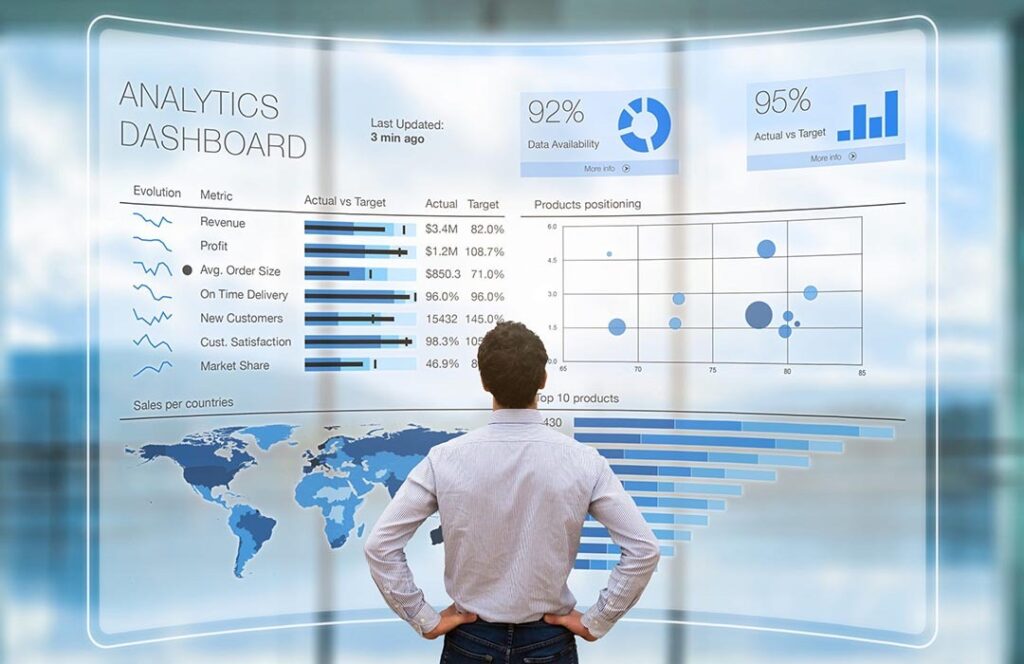
How Insights Drive Business Decisions
A successful business uses knowledge that encompasses all departments of the company. The sales department will know which products sell best in certain areas. The operations department will know where the problem areas are within the production process. The customer service department will know what problems are more common, and the financial department will know areas where they can cut expenses.
The answer is to have the right questions to answer before we even get to the data analysis. What problem do we want to solve? What kind of decision do we want to make? Data analysis without a purpose is pointless and not very useful at all.
The Competitive Advantage
Those who use business insights properly gain serious advantages. For instance, they normally recognize new trends before others; they have a deeper understanding of customers; and, most importantly, they are able to use resources more productively. It is out of these advantages that better products, better customers, and better financial performance are achieved.
The difference between average performers and industry leaders may simply be the degree to which they can transform data into useful knowledge. Organizations that are good at this skill are better at making decisions and adapting to a changing world.
A Continuous Journey
Knowing what is a business insight is the starting point for a business to improve continuously. The business landscape changes, customer needs shift, and new competitors arise. Therefore, it is imperative for companies to continue analyzing new data and developing fresh business insights.
The most successful organizations view insights, therefore, not as episodic events, but more as a dialogue with their data. They build organizations for continuous learning, they promote curiosity about why certain events occur, and they remain agile so they can take advantage of these newfound insights.
Explore more business insights and strategies on Rise Asia to stay ahead in today’s competitive landscape.