

According to the latest Investment trends in Asia, there has been a major shift in high-value and technology-driven investments in Vietnam during early 2026. With the diversification of global supply chains, it is not just the low-cost destinations that are being favored by international giants anymore. Instead, they are looking for regions with strong digital infrastructure and reliable sources of energy. Hence, Vietnam has become one of the hotspots for strategic investments in semiconductors and green energy. This is one of the major drivers of Asian economic growth in the post-pandemic scenario.
Vietnam has kicked off 2026 with remarkable FDI figures. In fact, recent statistics pointed out that disbursed FDI reached $1.68 billion just in January. This is an increase of 11.3% over the previous year. However, the total registered capital has shown a more selective tendency.
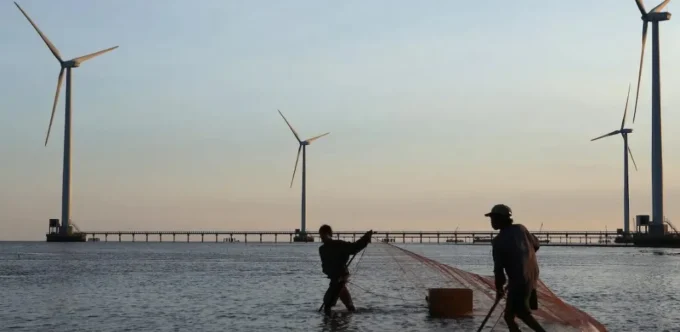
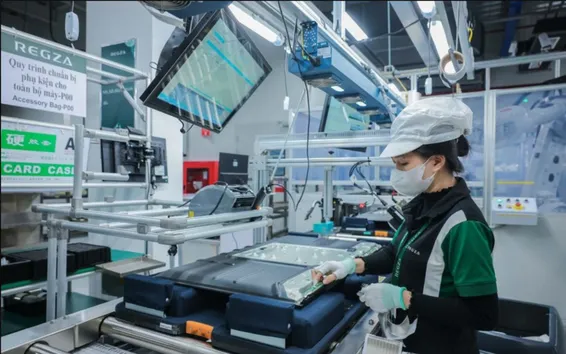
Moreover, the FDI structure is undergoing significant and rapid transformation. A significant part of the FDI is flowing into high-tech manufacturing and renewable energy. In fact, there are several proposed billion-dollar green hydrogen and LNG power projects. In other words, Vietnam is entering a new era of becoming a “Green Production Hub” for FDI investors in Asia.
What’s driving the growth? First, Vietnam’s strategic position in Southeast Asia offers the country a tremendous competitive advantage. Second, the country’s Free Trade Agreements (FTAs) offer unmatched market access.
Furthermore, the government’s dedication to foreign direct investment in Asia has removed many legal barriers. New decrees issued in 2026 have reduced the lead time between project registration and start. This has prompted companies such as Samsung and Intel to expand their R&D capabilities in Hanoi and Ho Chi Minh. This local know-how is critical to the expansion of the market into the ASEAN region. So, the country is moving beyond assembly into high-tech design.
How does this story illustrate how Asia is growing? This is a story of the “spillover effects” for domestic businesses. The government is now encouraging stronger links between FDI businesses and domestic businesses.
In addition, there are now incentives for FDI businesses that use local resources. This will strengthen the domestic supply chain and enhance domestic value-added products. Moreover, there is now a goal to train 50,000 semiconductor engineers. This is a critical part of being a magnet for long-term international investors in Asia. Vietnam is building a domestic ecosystem that is resilient to volatility.
The outlook for the rest of 2026 appears exceptionally favorable. The government, through the Ministry of Finance, aims for double-digit growth during the 2026-2030 period. To do so, the mobilization of all social resources must be considered.
In conclusion, the “Quality FDI” model is the way forward for Vietnam. By focusing on technology, ESG, and human resources, the country is building its future. Thus, Vietnam will remain at the forefront in the new global economic order.
Want to stay updated on the capital shifts and strategic investments shaping the region? Visit RiseAsia Vietnam for the latest intelligence on FDI and market trends in Vietnam.
The dominant trends focus on high-quality FDI, particularly in semiconductors, green hydrogen, and digital infrastructure projects.
Vietnam disbursed approximately $1.68 billion in FDI in January 2026, marking an 11.3% increase year-on-year.
The Venture Capital Asia market is seeing a spectacular shift as of...
The evolving landscape of Cross-border investment Asia has witnessed a renewed and...
Across Southeast Asia, investors are quietly shifting their attention. And increasingly, that...
The latest investment trends in Asia have officially shifted their focus to...