

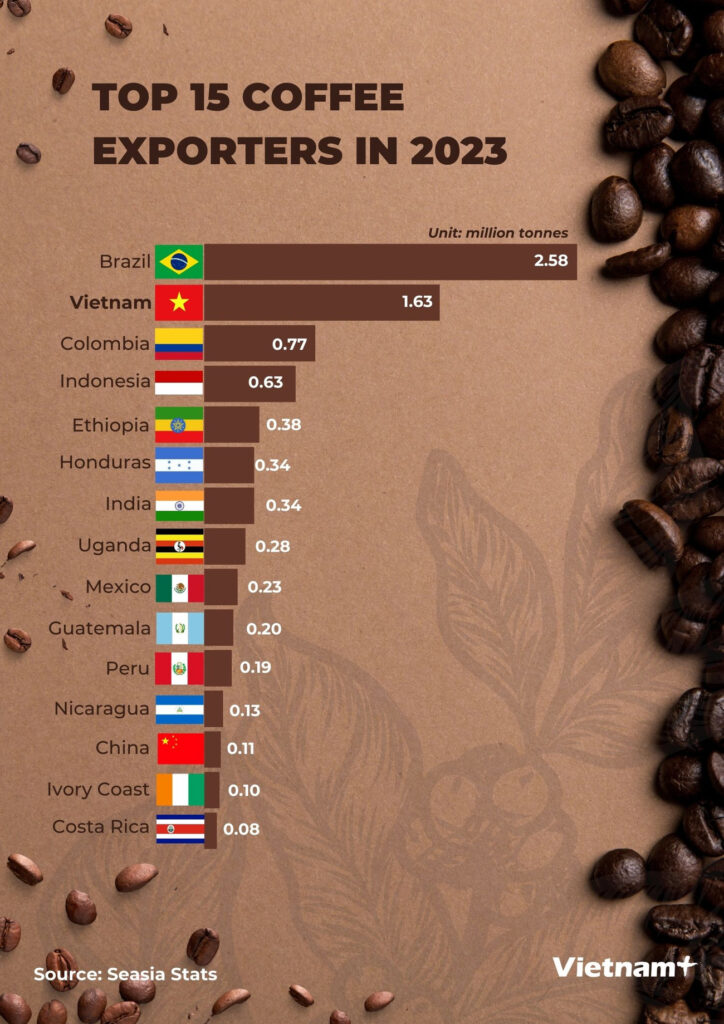
The Vietnam coffee export is reaching new heights as the country is strengthening its position in the world coffee market. Vietnam is the second-largest coffee exporter and the world’s leading Robusta supplier, it has an incredibly strong growth rate: The strong demand, good weather, and investments in processing facilities are key factors that are fueling the growth of the coffee industry in major coffee-growing regions of Vietnam.
Record-Breaking Export Performance
The coffee industry in Vietnam has shown significant performance over the recent period. According to MINISTRY OF AGRICULTURE AND ENVIRONMENT, the country exported 1.1 million tons of coffee worth $6 billion between January and July 2025. The country has shown a 7.4 percent increase in terms of quantity and a remarkable 65 percent increase in terms of value over the same period last year.
The figures shown by the country over the recent period have been record-breaking. The target of the country’s coffee industry to reach a total export value of $8 billion this year is a remarkable achievement.
The Central Highlands Advantage
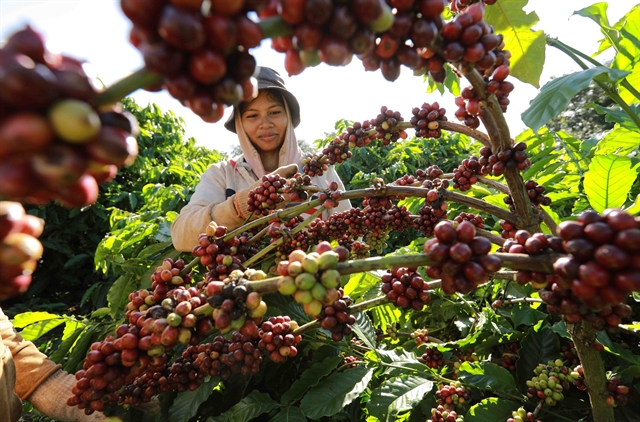
Vietnam’s coffee industry focuses on the central highlands region, where Dak Lak, Lam Dong, and Gia Lai have the most favorable conditions for coffee cultivation due to their volcanic soil, altitude, and climate.
There are hundreds of thousands of farming families who cultivate the coffee plantations in these areas. Coffee is the primary income source and heritage for the people in the highlands. Decades of knowledge have allowed the people to develop core competency, especially in the production of Robusta coffee.
Processing Capabilities Expand
Vietnamese companies are increasingly investing in the processing of values. Large companies are putting up modern processing facilities across the country, and this has helped Vietnam to move into the export of processed products instead of the usual exported raw beans.
Instant coffee production shows good growth. The production level increases as the processing plants process raw beans to produce instant coffee, which is then exported. Specialty roasting plants are also created, primarily doing business in high-end markets.
Meeting International Standards
The industry is responsive to changes in global standards. Vietnamese coffee producers trace the history of their coffee’s journey from the farm to the point of export. This is a reaction to increasing global consumer requirements. The government also assists this process through technical support and monitoring tools. Regional databases help farmers with requirements to export into new markets.
You can learn more about Vietnam’s agricultural policies on their Ministry of Agriculture and Environment website. This prepares the ground for a strong position for Vietnamese coffee in a tightening worldwide situation.
Farmer Investment Increases
Favourable market conditions prompt farmers to invest in their plantations. Families buy better quality inputs and modern techniques to improve irrigation systems within their plantations. This leads to increased production and quality over time.
Extension services offer training programs, which teach the sustainable practice of natural resource management. A farmer is taught practices that ensure the health of the soil, conserve water sources, and minimize the usage of chemicals. All these ensure a high level of productivity while addressing the environmental concerns.
Domestic Coffee Culture Thrives
Vietnamese coffee culture thrives in the local sphere despite the success of coffee exports. On every street, coffee shops are numerous, ranging from conventional sidewalk cafes serving “ca phe sua da” coffee (iced milk coffee) to specialty cafes with pour-over brewing techniques.
Young Vietnamese consumers are driving innovation in coffee culture, trying various coffee brewing techniques and purchasing single-origin coffees and local coffees. You can read more related stories about food/drink culture from Vietnam and Southeast Asia on RiseAsia. This is a very advanced domestic market, which drives improvements in quality and hence subsequent exports.
Sustainable Practices Gain Momentum
Today, the sector is moving towards environmental sustainability. Farmers are increasingly using shade-intensity cultivation techniques, organic approaches, and water conservation methods. This is attracting environmentally sensitive consumers, while also ensuring sustainability in the future.
Coffee organizations support the conservation of biodiversity in farming communities. The presence of wild trees is crucial in the conservation of biodiversity, as they provide refuge for wild animals and also enrich the soil cover.
Infrastructure Supports Growth
Vietnam’s export infrastructure is improving. Modern port facilities are efficient in the export of coffee due to improved infrastructure. There are streamlined customs services that help avoid delays and expenses in the transportation of coffee from the highlands.
Free trade agreements can remove trade barriers in key markets. Vietnam’s participation in regional trade agreements can give a boost to coffee exporters, as production standards and trade participation can create a strong position for Vietnam.
Building on Strength
Success of Vietnam’s coffee export business can be attributed to the dedication of coffee farmers, processors, exporters, and the Vietnam government’s supporters over the years. The coffee industry has grown from a small base to international prominence through dedication and commitment to quality and efficiency.
The foundation it provides is also essential in ensuring that growth continues to flourish as the consumption of coffee worldwide increases. Vietnamese coffee is known to have a reputation that is reliable and affordable, and this reputation opens the doors to new and old markets. The natural advantages, skills of the people, and strategic investments provide the foundation for opportunities that lie in the future.
Want to find out more about agriculture trade and economic achievement in Vietnam? Learn how other Vietnamese commodities excel in the global market. Visit RiseAsia to find out all about trade trends and business opportunities within Southeast Asia.