
Billboard Advertising Singapore
Infrastructure & MobilityLiving Asia

Across the Archipelago: Infrastructure and Daily Life in Indonesia

URL copied
Share URL copied

On many Indonesian islands, the sea is both a view and a barrier.

Boats replace highways. Airports substitute rail lines. In some regions, the nearest major hospital or distribution hub sits hundreds of kilometers away — separated by water.

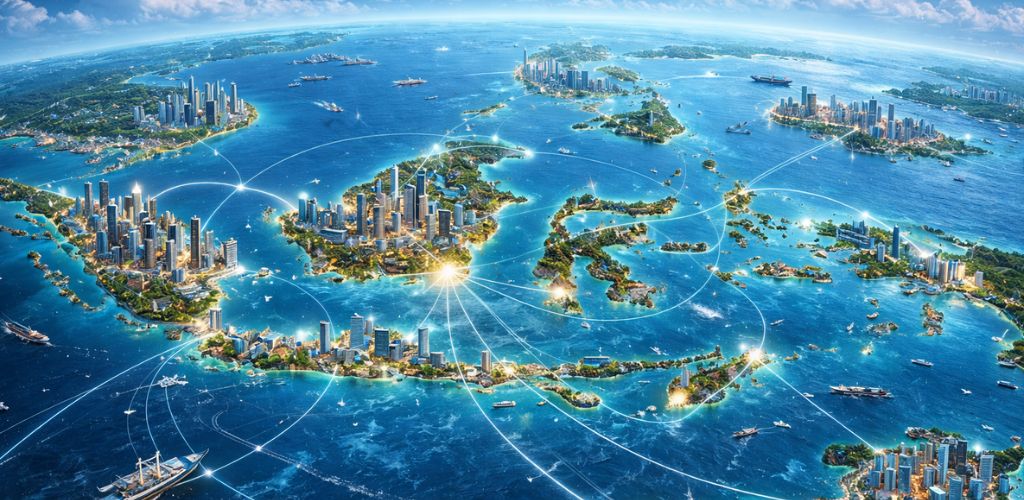
Indonesia’s infrastructure challenges begin with geography. Stretching across more than 17,000 islands, the Indonesia archipelago spans a vast maritime corridor between two oceans. Distance here is not symbolic. It shapes how people travel, trade, and live.

Across this island nation, infrastructure is less about convenience and more about connection.

Geography Shapes Movement

Unlike countries built on continuous landmass, Indonesia depends heavily on sea and air transport. Roads matter, but they cannot unify the nation alone.

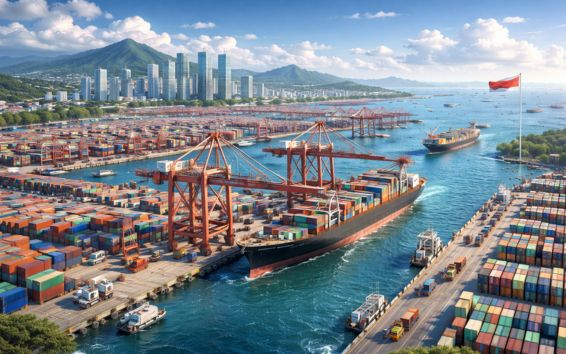
Cargo ships carry essential goods from industrial centers to smaller ports.

Meanwhile, planes fill in the gaps when maritime lines are too sluggish or unreliable.

But the mechanism is hard to understand. Weather problems, small ports, and unequal infrastructure may all impede down delivery. In the eastern regions, logistics might take longer and cost more, particularly.

Because of this, getting across the Indonesian archipelago is still unequal. Java has a lot of highways and sophisticated ports, but the outlying islands sometimes have fewer ways to get around.

These fundamental realities are the basis for Indonesia’s continuous problems with its infrastructure.

The Cost of Distance

Distance influences more than travel time. It affects daily expenses.

Across the Indonesia archipelago, goods rarely move in a straight line. Instead, they pass through multiple hubs — factory to main port, main port to regional dock, regional dock to local distributor.

Each transfer adds cost.

Price gaps remain visible across the country. In some remote provinces, everyday goods can cost far more than they do in Jakarta or Surabaya. Subsidies and stabilization policies exist, but moving products across multiple islands still adds layers of cost.

At the checkout counter, families notice it the most. For businesses, it affects competitiveness.

In many cases, improving ports and distribution systems would reduce price pressure faster than subsidies alone.

Urban Concentration and Infrastructure Gaps

Because infrastructure remains strongest in Java, economic gravity pulls toward it.

Jakarta, Bandung, and Surabaya continue to attract businesses and workers. Stronger utilities, better ports, and reliable road access reduce operational risk. Naturally, companies cluster where connectivity is strongest.

The growth of the outer islands, on the other hand, happens at different speeds.

Java’s Dominance in National Connectivity

More than half of Indonesia’s population lives on Java. Unsurprisingly, infrastructure spending historically concentrated there.

Highways connect major cities. Rail projects expand commuter movement. Industrial zones sit near ports and airports.

Over time, this created a cycle: stronger infrastructure attracts investment, and investment justifies further infrastructure.

Outside Java: Progress With Constraints

Beyond the main island, improvements are visible but uneven.

New airports have opened in eastern provinces. Port upgrades are underway in strategic maritime zones. Roads continue expanding into rural areas.

Yet scale remains the challenge. The Indonesia archipelago is vast, and equal development across thousands of islands is not simple.

Closing this gap remains one of the country’s most persistent infrastructure challenges.

Indonesia archipelago

Government Efforts to Improve Connectivity

Knowing these facts, politicians have made infrastructure a top priority for the long term.

Building toll roads has sped up during the last ten years. Port modernization programs expanded. Logistics corridors were upgraded to reduce congestion.

The Sea Toll Initiative

For years, shipping routes across Indonesia were irregular. Some smaller ports waited days — sometimes longer — for the next cargo vessel.

The Sea Toll program was introduced to address that gap. Instead of relying on unpredictable schedules, the idea was to establish fixed maritime routes linking western and eastern Indonesia more consistently.

On paper, the logic is simple: regular ships reduce uncertainty. When uncertainty drops, price volatility should ease.

In practice, outcomes differ from port to port.

Larger hubs have benefited from better scheduling and smoother cargo handling. Smaller ports, however, still face storage limitations and equipment constraints. In some areas, infrastructure improvements on land have not kept pace with shipping frequency at sea.

Still, maritime connectivity remains central to reducing infrastructure challenges across the Indonesia archipelago. The sea is not an obstacle to overcome — it is part of the system itself.

The Relocation of the Capital

Jakarta’s congestion is visible long before you reach the city center.

Traffic, flooding risks, and land subsidence have placed increasing pressure on existing infrastructure. Over time, the concentration of government, finance, and business functions on one island created strain that roads alone could not solve.

The decision to relocate the capital to Nusantara in East Kalimantan reflects that imbalance.

The change is more than just a symbolic gesture; it also shows an effort to spread the country’s attention more equitably. Policymakers expect that moving political and institutional weight away from Java will lead to more economic activity, but not right immediately.

It is yet unclear whether this move would substantially change the balance of infrastructure throughout the Indonesian archipelago. Changes on a large scale don’t usually show effects right away.

Yet the message is clear: geography shapes development, and long-term planning must respond to it.

Infrastructure and Daily Life

For residents, infrastructure is rarely discussed in abstract terms.

Infrastructure affects delivery times. It also influences fuel prices, especially outside major cities. Access to schools, hospitals, and employment depends on it as well.

In smaller islands, travel planning requires more coordination. Weather forecasts matter. Shipping schedules affect business operations. Even internet connectivity can vary depending on location.

At the same time, digital platforms have softened some barriers. E-commerce reaches remote communities more easily than before. Financial technology expands payment access.

Even so, digital inclusion still depends on physical infrastructure — cables, towers, and stable electricity.

Across the Indonesia archipelago, daily routines reflect the geography beneath them.

Regional Development and Economic Balance

Infrastructure is closely tied to long-term economic balance.

Investors are interested in places where the transportation and utilities infrastructure has become better. In a lot of circumstances, those who can’t get it are more reliant on the local economy and government money.

Over time, an unfair link might make the discrepancies in income even worse.

Therefore, addressing infrastructure challenges is not merely about engineering. It is about social cohesion and national integration.

Stronger ports mean stronger trade links. Reliable roads support agriculture and manufacturing. Stable utilities encourage private sector growth.

When connectivity improves, opportunity spreads.

Looking Ahead

Indonesia’s infrastructure challenges are structural. Geography guarantees complexity.

However, steady investment suggests that progress, while gradual, is ongoing. Ports are being modernized. Highways continue expanding. Digital networks extend deeper into rural areas.

Change does not happen overnight.

Yet across the Indonesia archipelago, incremental improvements accumulate. A new road reduces travel time, modernized ports speed up unloading, and reliable internet connection supports small businesses.

Piece by piece, connectivity strengthens.

In the end, infrastructure in Indonesia is not only about bridges and airports. It is about stitching together islands that were never physically connected to begin with.

And in a nation defined by water, that task will always require patience — and persistence.

Questions and Answers

Why are infrastructure challenges so common in Indonesia?

Geography plays a big role. The Indonesia archipelago stretches across thousands of kilometers, so moving people and goods is rarely straightforward. Water separates communities, and that adds time and cost to almost everything.

Yes, especially outside major cities. When goods pass through several ports before reaching smaller islands, transport costs build up. That often shows up in retail prices.

There have been efforts — port upgrades, new roads, and expanded shipping routes. Some regions are seeing improvements. Others are moving more slowly. Because of the scale of the Indonesia archipelago, progress tends to be gradual rather than immediate.

Share URL copied
Related Articles

IKEA Home Decor Malaysia Launches Fun GREJSIMOJS Collection

People often design their homes to be comfortable and useful. But sometimes...

Shopee Starts Raya Promotion Malaysia Payung Lagi

During Ramadan and Raya, families get together, eat together, and reconnect with...

MindNexis Mental Health Hub Opens New Wellness Space

Living in the city can be hard. Mental health is often put...

Bangkok Food Innovation Elevates Thai Cuisine

Chefs in Bangkok are mixing old Thai recipes with innovative cooking methods,...