
People who have tried to cross Metro Manila during rush hour know what the problem is.
The traffic is moving slowly. Sometimes it hardly moves at all.
Buses move quite slowly through crowded roadways. There are large queues of cars with private cars in them. Even simple excursions can become into long, annoying ones.
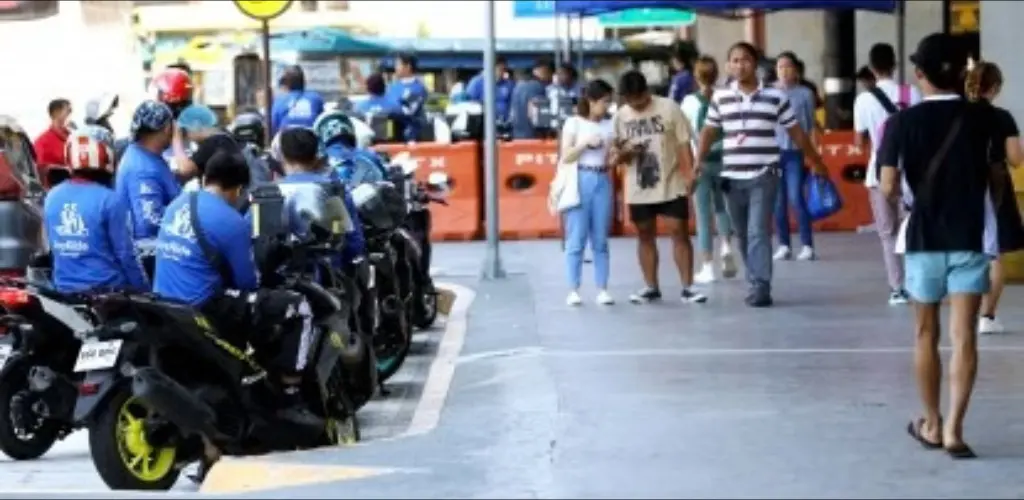
In this setting, a particular type of transportation has gradually gained popularity. Motorcycle cabs.
In the Philippines, the motorcycle taxi business has risen quickly in the last several years as people look for speedier methods to get around busy cities. With ride-hailing applications, people can now book motorcycle trips in minutes and get through traffic much faster than with regular cars.
What began as a simple test has grown into one of the most talked-about changes in how people get around in cities in the Philippines.
Motorcycles have always been an element of transportation in the Philippines.
People utilize them to make deliveries, get to work, and run small companies. But it’s still rather fresh to transform motorcycles into organized passenger transport services.
The idea is easy.
Motorcycles are easier to get about in traffic than vehicles since they are smaller. That advantage can save a lot of time on busy highways.
This speed is important for people who are hurrying to meetings or attempting to get home before the evening rush hour gets worse.
Motorcycle taxis are a fast way to get about that might take a lot longer in a car.
Passengers also like how easy it is to book rides through mobile apps. You can set up a ride right from your smartphone instead of waiting for regular transportation.
Technology was a big part of the industry’s expansion.
Angkas, JoyRide, and Move It are examples of platforms that use mobile apps to connect riders and passengers.
Users can do the following on these platforms:
The system operates like ride-hailing services for cars, but bikes make the travel speedier in heavy traffic.
This digital layer also helps make the transportation system more organized.
Riders sign up on platforms, GPS tracks journeys, and consumer feedback helps keep service standards high.
Another reason for the sector’s quick growth is that it creates jobs.
Motorcycle taxi platforms have opened up a new kind of flexible job for thousands of Filipinos.
A lot of the people who ride these services already have motorcycles. By signing up for a platform, individuals can make money by driving others around during their free time.
People that want flexible schedules will find that the approach works quite well.
Some riders work full-time. Some people only utilize the platforms part-time to make extra money.
The industry also helps the economy in other ways, such as:
Because of this ripple effect, the motorcycle taxi industry helps a number of other businesses.
Even though it is becoming more popular, the sector has had to deal with questions from regulators.
In the past, motorbikes in the Philippines were not allowed to carry paying passengers. As ride-hailing services grew, lawmakers started to look into ways to regulate the new business model.
Government agencies started experimental initiatives to learn more about the industry.
The goal of these trials is to look into problems like:
The goal is to find a balance between safety and new ideas.
Clear rules could help the sector become more stable and make passengers feel more confident in the service.
Safety is a big problem for any transportation service.
Motorcycle taxi companies have put in place a number of steps to keep passengers safe.
Most providers won’t let riders pick up clients until they’ve finished training.
Most of the time, safety rules include:
The digital platform itself adds another layer of oversight.
Companies can keep track of each journey and respond to complaints more rapidly because they can see how well drivers are doing.
These solutions are slowly helping the industry evolve toward higher standards of professionalism.
The area has motorcycle taxis which operate as more than a basic service. Southeast Asian cities experiment with new transportation methods to solve their traffic problems and handle their increasing population.
The modern world now includes ride-hailing applications together with electric scooters and bike-sharing systems and small mobility solutions. The Philippines is heading toward the same route which other countries have established.
Cities are exploring additional transportation options beyond their existing traditional systems. The arrangement suits motorcycle taxis because they match the existing system. The system works well with both short trips and larger transportation networks which include buses and trains.
The motorbike taxi business in the Philippines is still growing.
The rules keep changing, and people are still talking about what the industry will look like in the long term.
But one thing is apparent already.
There is a need.
People that commute demand speedier ways to get around. People who ride are looking for ways to make money that are flexible. It’s easier than ever for passengers and drivers to connect through digital channels.
Motorcycle taxis may become a permanent part of getting around in Philippine cities as they keep growing and traffic is a problem every day.
For more Asia stories, checkout riseasia.com.
Motorcycle taxis operate under government pilot programs while policymakers study long-term regulations.
Major platforms include Angkas, JoyRide, and Move It.
They offer faster travel in congested cities and provide flexible income opportunities for riders.
During the Gaikindo Jakarta Auto Week, Changan formally unveiled the Lumin electric...
The technological shift wave is transforming the provinces surrounding Hanoi and Ho...
In the burgeoning digital world of Vietnam this March 2026, having a...
The Hyperboost Edge is a new running shoe from adidas that is...