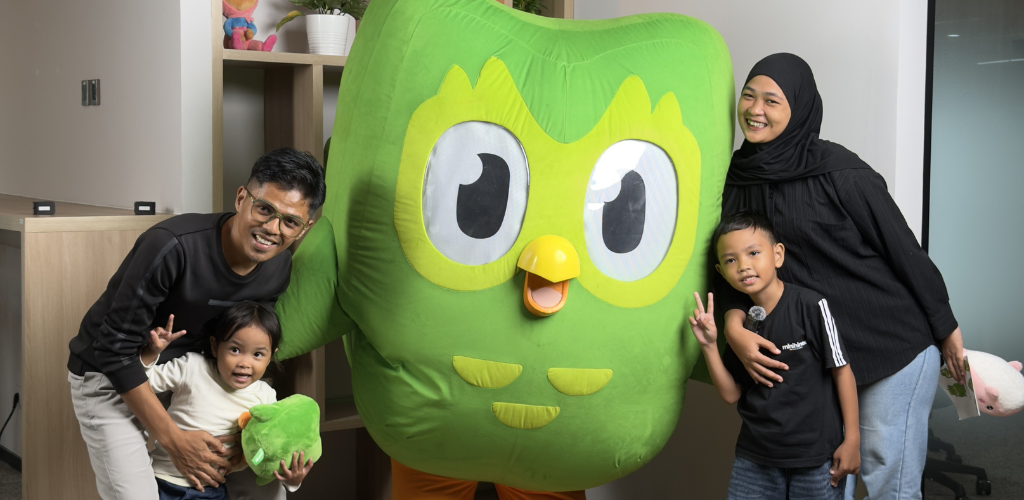
Across Indonesia, more parents are encouraging their children to learn foreign languages from an early age. While many families see language skills as an advantage for future education and careers, growing research suggests the benefits begin much earlier by supporting children’s cognitive development.
As digital learning tools become more accessible, parents are increasingly combining everyday conversations, formal education and educational platforms to help children develop language skills in an engaging and flexible way.
Learning a new language involves much more than memorising words. It requires children to recognise patterns, understand context, recall information and switch between different ways of thinking.
According to psychologists, these mental activities stimulate several areas of the brain simultaneously, helping to strengthen working memory, attention and problem-solving abilities. Over time, this contributes to cognitive flexibility, an important skill that supports learning across many subjects.
Child, Adolescent and Family Psychologist Ayoe Sutomo explained that language learning helps children build the ability to connect ideas and adapt to different situations, creating a strong foundation for future learning.

Experts also stress that cognitive benefits develop gradually through regular practice rather than short bursts of learning.
Creating enjoyable learning experiences encourages children to stay motivated, while consistent exposure helps reinforce new vocabulary and concepts over time. Parents also play an important role by guiding children’s use of digital learning platforms and balancing screen time with everyday interaction.
Rather than treating language learning as an academic task, many educators now recommend integrating it naturally into daily routines through conversations, games and storytelling.
Several studies continue to strengthen the connection between language learning and brain development.
Research cited by Duolingo suggests that learning a language regularly challenges the brain to retrieve information, recognise patterns and adapt to new linguistic rules, providing ongoing mental stimulation.
Meanwhile, a study conducted by Baycrest and York University found that adults who spent around 30 minutes a day learning a language over four months demonstrated measurable improvements in executive function, including stronger working memory, focus and cognitive flexibility.
Although the study involved adults, researchers note that these findings contribute to a broader understanding of how language learning benefits cognitive performance across different age groups.
Technology has made language learning more accessible than ever before. Interactive platforms allow children to practise languages through games, short lessons and personalised learning paths that fit easily into daily routines.
Duolingo, which now serves more than 133 million monthly active users worldwide, is one example of how digital education is helping families introduce foreign languages at home.
For Indonesian parent Gosra Andri Putra, combining everyday multilingual exposure with digital learning tools helped nurture his son Hudzaifah’s interest in languages from an early age. He believes educational apps can support learning effectively when parents remain involved and supervise children’s screen use.
Beyond improving communication, multilingual learning also helps children develop curiosity, confidence and an appreciation of different cultures.
As Southeast Asia becomes increasingly interconnected through education, technology and international business, language skills are becoming valuable life skills that extend beyond the classroom.
For many families, introducing foreign languages early is no longer simply about preparing children for future careers. It is about encouraging lifelong learning, adaptability and the confidence to engage with a rapidly changing world.
To learn more about Duolingo and its language-learning programmes, visit https://www.duolingo.com.
Across Asia, parents, educators and technology providers are finding new ways to make learning more engaging and accessible. From digital education platforms to innovative teaching approaches, these developments are helping prepare the next generation with the skills needed for a more connected future.
At RiseAsia, we highlight stories that showcase education, innovation and human development across the region. Discover more insights into Asia’s growing knowledge economy by visiting RiseAsia.
Many parents believe early language learning helps children develop communication skills while also supporting memory, attention and cognitive development.
Language learning encourages the brain to recognise patterns, recall information, solve problems and switch between different concepts, strengthening cognitive flexibility over time.
Yes. Interactive platforms such as Duolingo provide engaging lessons that complement classroom learning, especially when supported by regular parental guidance.