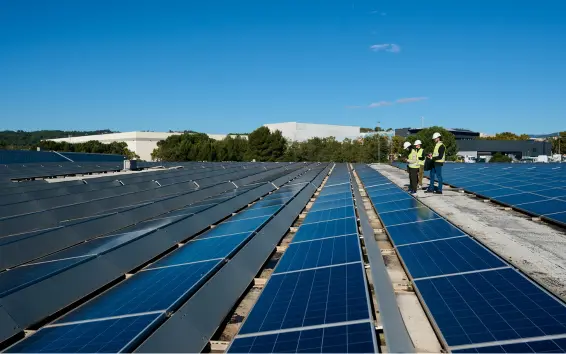

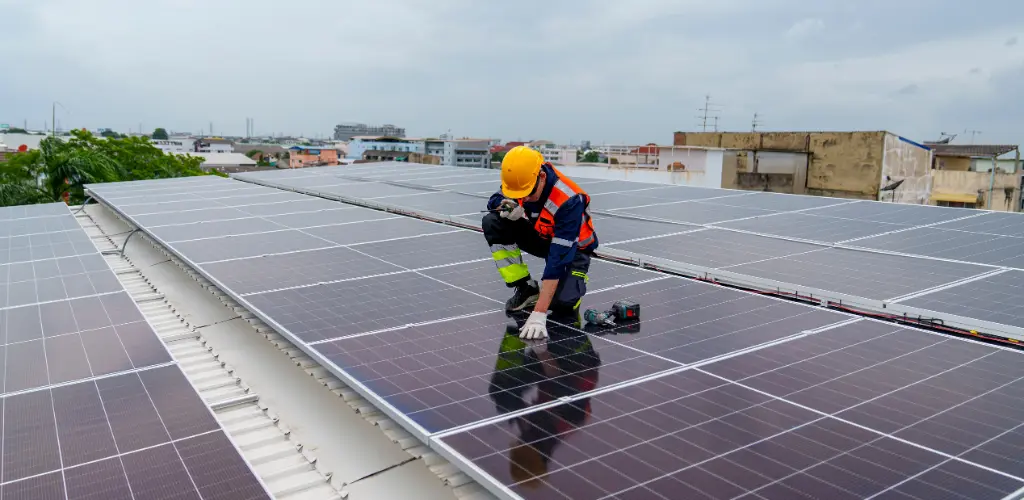
Today, if you walk through a lot of industrial parks in Luzon, you can see something different. Look at the roofs of the factories.
Buildings that used to only be used for storage and production are now getting rows of dark panels. Unused space on rooftops is slowly becoming a part of the country’s energy story.
In the Philippines, solar rooftop systems are slowly becoming more popular in a number of manufacturing centers.
The shift didn’t happen all at once. But rooftop solar is starting to make sense for businesses who want to keep their electricity expenses down and satisfy their sustainability goals.
Electricity has long been one of the most expensive things for industries.
Power is always on for production lines, machines, refrigeration systems, lights, and ventilation. Costs go up when the price of electricity goes up.
Because of that, many businesses have had to look into other options.
Solar panels have a simple idea: instead of relying completely on the grid, make some electricity right on the site.
Of course, it doesn’t get rid of grid power. But it can lower the amount of energy that businesses need to buy during the day, when solar panels are making power.
It’s hard to miss the chance for industries with big roofs.
Industrial buildings usually feature wide, flat roofs that get sun all day long.
In places like CALABARZON and Central Luzon, manufacturing zones frequently cover a lot of ground and don’t get much shade from neighboring buildings.
This makes factory roofs great places to put up solar panels.
Companies can put solar panels on top of the buildings they currently have instead of creating solar farms on separate land.
Some buildings now have solar panels on roofs that cover thousands of square meters. These systems can make a lot of a factory’s electricity on sunny days.
In the Philippines, the move toward industrial solar is becoming clearer in major manufacturing areas.
In the past few years, more rooftops have been built in industrial parks in Laguna, Batangas, and Pampanga. Some distribution facilities and logistics warehouses are also getting in on the action.
Rooftop solar gives businesses with big buildings two benefits at once.
First, it can help keep electricity prices stable over time.
Second, it lets businesses prove that they are making progress toward environmental targets that more and more international partners and customers require.
Sustainability is becoming a normal feature of doing business in global supply chains.
The way projects are funded is one reason why solar installations are growing faster than ever.
Companies used to have to spend a lot of money to install solar systems themselves.
Instead, a lot of factories deal with solar developers these days.
These developers make and put up the solar panels, and then they sell the electricity they make to the industry through long-term contracts. The factory saves money on electricity without having to pay for the equipment up front.
This deal has made rooftop solar more accessible, especially for businesses that don’t want to spend a lot of money on energy infrastructure.
Solar panels not only save money, but they also help cut down on pollution.
Manufacturing still relies a lot on traditional power sources. In the Philippines, solar panels are a technique to slowly move toward renewable energy without stopping current operations.
Solar power cuts down on the need for fossil fuels, even if it just meets portion of a factory’s electricity needs.
These changes are important for businesses who work with clients from other countries. A lot of big brands throughout the world now keep track of how their supply chains affect the environment.
Factories that switch to cleaner energy sources may be better able to connect with those networks.
At the same time, the development of rooftop solar is also creating new job opportunities in the local energy landscape.
There is an increased need for the services of solar developers, installation firms, and electrical experts. Project managers, technicians, and maintenance staff are also entering this new landscape.
In this way, solar panels are helping create new jobs in the domain of technologies, as well as “green” energy.
This workforce in the domain of renewable energy is increasing as new projects are being initiated.
There are obvious benefits of solar energy, but there are some drawbacks as well.
For example, the weather can affect the production of solar energy. Long rainy seasons in the Philippines can make solar panels less effective at certain times of the year.
Regulatory processes can also make installations take longer. Before connecting to the grid, projects must meet technical criteria and get the relevant clearances.
And for smaller producers, even lower installation costs can still feel like a big deal.
Because of these problems, solar adoption will probably continue to happen slowly rather than all at once.
Even though these problems exist, solar panels on industry roofs are becoming less and less rare.
Industrial areas that used to rely solely on traditional electricity are starting to try out other sources.
The adjustment is part of a bigger shift in how businesses think about energy.
Businesses are starting to recognize that they can make some of their own power instead of just getting it from outside power plants.
It’s a little change in how you think about things, but it might change how energy works in factories.
Right now, rooftop solar is only a small component of the country’s energy mix.
But the trend is getting stronger.
As technology gets better and more businesses trust the systems, installations will probably become more widespread in industrial parks.
What used to look like empty space on the roof may now be used for something else: silently making power above the industrial floor.
And that quiet change is already happening all over the Philippines.
Discover more Asia insights and stories on riseasia.com.
Rooftop solar refers to solar panels installed on the roofs of buildings to generate electricity from sunlight.
Factories use solar power to reduce electricity costs and improve their environmental performance.
No. Most factories still rely on the grid, but solar panels help supply part of their daily energy needs.
During the Gaikindo Jakarta Auto Week, Changan formally unveiled the Lumin electric...
The technological shift wave is transforming the provinces surrounding Hanoi and Ho...
In the burgeoning digital world of Vietnam this March 2026, having a...
The Hyperboost Edge is a new running shoe from adidas that is...