

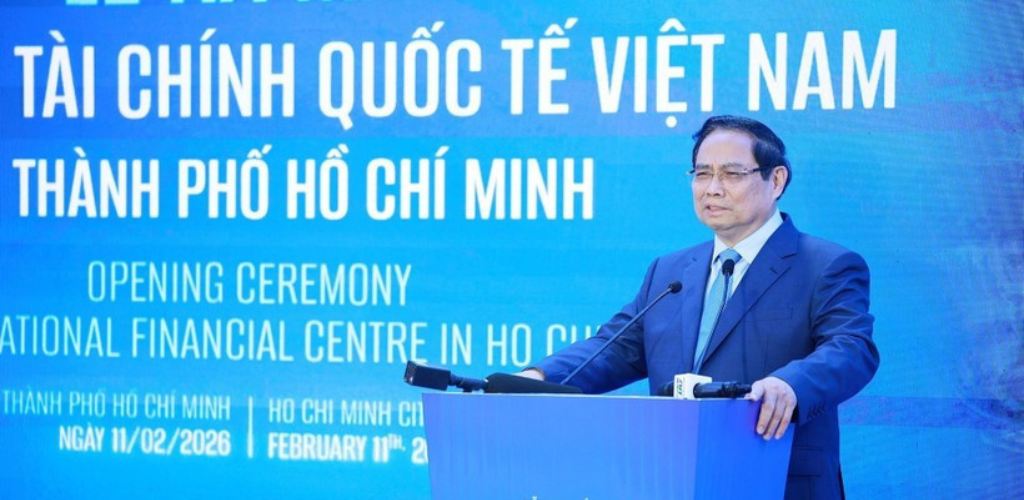

A historic event occurred in the Asia finance landscape in 2026, as Vietnam made an official entry into the competition of the finance hub in the region. Ho Chi Minh City has launched the Vietnam International Finance Center, at the same time unveiling the list of founding members and strategic investors.
Furthermore, the prime minister, Pham Minh Chinh, rang the gong to inaugurate the center, and the disclosure of the participating parties at the onset indicates the market structure and direction. Thus, this indicates Vietnam’s bold bid in the competitive environment of the Asia finance ecosystem.
Vietnam joins regional financial-hub race
The establishment of the Vietnam International Finance Center represents years of planning to place Ho Chi Minh City alongside Singapore, Hong Kong, and Tokyo in the pecking order of Asian finance. This ambitious project reflects Vietnam’s growing economic confidence and aspiration to win sophisticated financial services.
This coincides with the timing of various positive economic indicators. In January 2026, there were 368 more foreign investors and economic organizations with foreign investment of over 50% of their charter capital being granted the code for securities trading. This constant flow indicates increasing international confidence in the markets of Vietnam.
Founding Members Set Strategic Direction
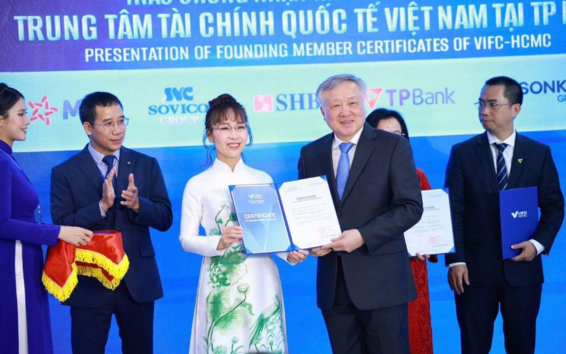
One unique aspect of this institution was the transparency it demonstrated right out of the gate. By stating their foundational and strategic investors at launch, Vietnam is demonstrating its commitment to building credibility in the Asia finance sector.
Most financial institutions in Vietnam invested substantial resources into the success of the event. International partnerships are important in creating a good reputation in the Asian region. This implies the presence of a balanced foundation of international and domestic investors adhering to the requirements of finance hubs within Asia.
The center has an operational framework with a governance structure that promotes regulatory compliance and professionalism. Operational systems have been established to ensure trust at an international level.
Special Regulatory Framework Attracts Capital
The center will operate under special regulation to compete in the Asia finance landscape. These include the liberalized foreign exchange controls, enabling ease of movement of currencies compared to other places in Vietnam. Also, banking license conditions are flexible to accommodate financial services.
The regulatory balance promotes openness along with monitoring. There is operational freedom for financial institutions, coupled with responsibility. The approach is akin to the successful models of established financial centers in Asia.
Specific capital markets for startups offer some extremely innovative features. Their crowdfunding and placement tools that cannot be found anywhere else in Vietnam become newly available. These allow for entrepreneurship while offering new opportunities as well.
Positive Economic Momentum
The overall economic conditions are also favorable for the development of the center. The sale of cars has risen by 95% in January in Vietnam. The total sales for the market were 36,875 vehicles. This shows that the economic conditions are improving.
Real estate markets also reflect renewed vitality. Demand for office space increases with the expansion of a company’s operations. The financial center would occupy prime locations, providing modern facilities designed to international standards.
Vietnam’s financial development occurs on various fronts at the same time; digital payments are on the rise while traditional banking is improving, and fintech companies are blooming while traditional organizations are modernizing.
Regional Context and Competition
The center enters a competitive world. Singapore retains dominance in Southeast Asia. Hong Kong plays host to Greater China. Tokyo serves Northeast Asia, while Dubai hosts the Middle East.
Rather than competing head-on with these established cities, the focus of Ho Chi Minh’s complementary strategy serves Vietnam’s burgeoning economy and provides a conduit for investment into the Southeast Asian markets. Its geographic position relative to the main markets in ASEAN countries presents the region with a strategic advantage.
The center aims for financial activities considered by Singapore as less important. Smaller transaction sizes, emerging markets, and frontier investment opportunities are the potential niches.
Infrastructure Enables Operations
Physical infrastructure is also invested in: physical office blocks with sophisticated telecommunications systems that allow for sophisticated trading activities. Transportation links connect the financial district with airports, ports, and residential areas.
Similarly, digital infrastructure also has equal importance, and that includes high-speed internet connectivity, secure data centers, and redundancy of power supplies. Cybersecurity is important for its own sake but also for facilitating international transactions.
Ho Chi Minh is helped by Vietnam’s rising connectivity with the international world. The location has direct flights with financial hubs. It also has a submarine cable which offers internet bandwidth to facilitate real-time participation.
Talent Development Priorities
Human capital represents a critical success factor. For the center, the human capital needs include professionals with international experience, technological, and cultural competencies. The Vietnamese universities are continually turning out a growing number of finance graduates, though the experience gained is limited.
Training programs seek to bring up local talent quickly. International financial institutions exchange skills through joint operations. Scholarships by the govt facilitate local education in financial fields.
Acquisition of experienced and qualified financial professionals from overseas also helps supplement the country’s development. Immigration policy requirements make room for the entry of qualified financial service workers. Competitive compensation packages are designed to make the city’s offers relatively attractive across the Asian region.
Technology Integration
The financial center has adopted technology from its early days. This includes aspects like blockchain technology, artificial intelligence trading platforms, and digital payments. This instills technology awareness in future trends.
There exists an ecosystem where traditional institutions and fintech startups operate, particularly because traditional institutions offer stability, while fintech startups introduce innovation. Synergy between these groups results in mutual benefits.
There is special scrutiny for digital currencies and tokens. Caution for the latter is stated at the regulatory level. The center particularly examines a controlled environment for testing blockchain-based products.
Long-Term Development Path
“The launch marks the beginning rather than the end of a long journey. Establishing a true international financial centre is a task that will continue to demand effort over decades. Success will depend on our ability to maintain policy consistency, regulatory credibility, and market integrity.”
Economic reforms supporting the center must continue. Further capital account liberalization will deepen market integration. Corporate governance reforms will support investor confidence. Enhancing legal systems will support property rights and contract enforcement.
In addition to that, the success of the center depends on the creation of actual value for its participants. Pricing strategies, differentiated services, and operations are the ones to shape success, not promotional activities.
Want more insights into the economic developments happening around Vietnam and its financial sector growth? Come visit us on Rise Asia for commentaries on current trends affecting the business environment of Southeast Asia.
Frequently Asked Questions (FAQs)
How does Vietnam's new finance center compare to other Asia finance hubs?
Vietnam ends up joining an already competitive market characterized by Singapore, Hong Kong, and Tokyo. Instead of a head-on competition characterized by centuries of development in these markets, Ho Chi Minh City has chosen a strategy of addition by highlighting the growing Vietnamese market and access to ASEAN markets. Unique features offered by the hub include the availability of special regulations on the control of foreign exchange and specialized capital markets for startups, not offered in standard Vietnamese financial district markets. Competitive pricing and unique value are the key drivers of success and not competition with established markets. Proximity to ASEAN markets offers additional advantages to economic activities in the region.
What special advantages does the finance center offer international investors?
The center functions in accordance with strict regulations to ensure the attraction of global participation. Obtaining securities trading codes is simpler for foreign investors with 368 approvals in January 2026. There are easy foreign exchange controls for the smoother movement of currency, which is more favorable than other places in Vietnam. Specialized banking licenses are issued for the convenience of the services offered. There is specialized capital for the operation of crowdfunding and private placement for startups. However, “special advantages” does not imply the absence of the need for licenses and approvals for the operations.
Why did Vietnam choose to announce founding members at the launch ceremony?
Transparency in operational structure and strategic direction-by immediate disclosure of the founding members and strategic investors-is a confident approach to viability. In sum, it would allow potential participants to better understand who they would work with. Moreover, the public announcement makes the founding members responsible for their active support to development, rather than their symbolic commitments. Contrary to the gradual recruitment approaches, the signal for credibility comes through established institutions’ commitment. Above all, as compared to projects not transparent about who actually participates, this helps to bring different aspects into Vietnam Center’s competitiveness in the Asia finance markets.