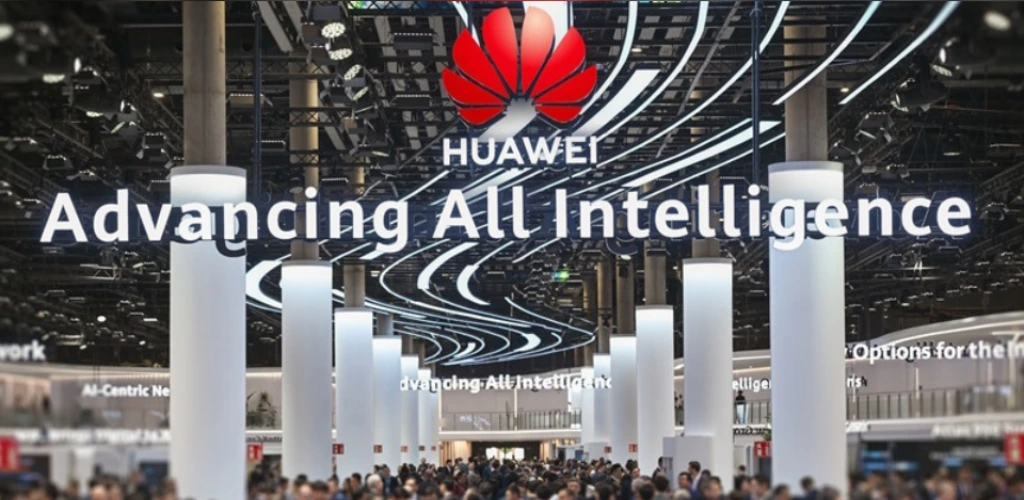
The future of connectivity took centre stage at MWC Barcelona 2026 as Huawei introduced new innovations designed for the next generation of intelligent networks. At the heart of its announcement was U6 GHz technology Huawei, a key development expected to strengthen the evolution of 5G Advanced networks and prepare the path toward future communication systems.
Under the theme Advancing All Intelligence, the company presented solutions that combine high performance connectivity, artificial intelligence, and powerful computing infrastructure.
Huawei’s latest launch focuses on all scenario U6 GHz products designed to improve network capacity and performance. The company believes the coming years will be a critical period for expanding 5G Advanced worldwide.
With access to the U6 GHz band, telecom companies can provide faster uploads, smoother connections, and less delay. This is especially important as more mobile apps begin using AI technologies.
5G Advanced is already gaining traction around the world.
There are currently around 70 million 5G Advanced users worldwide, and Huawei has worked with carriers in China to provide continuous 5G Advanced coverage across 270 cities. In addition, telecom operators in more than 30 provinces have launched commercial 5G Advanced service packages.
With growing demand for AI applications on mobile devices, the role of U6 GHz technology Huawei is expected to become even more important for future network performance.
Alongside its spectrum innovations, Huawei introduced new AI Centric Network solutions designed to help telecom operators manage increasingly complex systems.
These solutions focusing on three main layers.
At the service layer, Huawei enables collaboration between specialised AI agents. These agents can support services such as smart calling, broadband optimisation, and customer experience management.
At the network layer, Huawei is accelerating the rollout of its Autonomous Driving Network Level 4 (ADN L4) technology. By the end of 2025, more than 130 telecom networks around the world had already used single scenario ADN systems.
Huawei is making the algorithms used in radio access networks, wide area networks, and core networks better at the network element layer. The goal of these changes is to make the network more reliable, less energy-intensive, and more efficient.
Huawei also talked about the growing need for large-scale computing infrastructure, in addition to connectivity.
At MWC Barcelona, the company showed off its SuperPoD cluster systems for the first time outside of China.
These solutions include
The systems use technologies like UnifiedBus interconnect architecture, which speeds up communication between computing units and lets AI models with trillions of parameters work.
Computing clusters like these will be very important for making smart services work as AI applications spread to more areas.
Huawei was also at MWC to talk about business technology, consumer devices, and efforts to make the internet available to everyone.
The company worked with other businesses to create 22 new solutions for the industry. These solutions are meant to help industries like manufacturing, energy, and public services go digital faster.
Huawei showed off its newest smartphones, tablets, laptops, wearables, and audio devices with AI features to the public.
The company also shared updates on its digital inclusion efforts. By the end of 2025, Huawei had helped bring internet access to about 170 million people living in remote areas across more than 80 countries.
Huawei is still focused on making networks faster, computers stronger, and digital access more widely available around the world. One way they do this is by using new technologies like U6 GHz.

Technology is rapidly transforming industries across Asia and beyond. From AI driven networks to next generation connectivity, innovation continues to reshape how businesses and communities operate.
Explore more insights on RiseAsia to discover how emerging technologies are influencing digital transformation, telecommunications, and global innovation.
U6 GHz technology Huawei refers to Huawei’s use of the upper 6 GHz spectrum band to improve network capacity, speed, and efficiency for 5G Advanced and future mobile technologies.
The U6 GHz band provides additional spectrum that allows telecom operators to support faster speeds, lower latency, and better performance for data intensive applications.
Huawei showcased AI centric networks, U6 GHz products, SuperPoD computing systems, and new enterprise and consumer technology solutions.
During the Gaikindo Jakarta Auto Week, Changan formally unveiled the Lumin electric...
The technological shift wave is transforming the provinces surrounding Hanoi and Ho...
In the burgeoning digital world of Vietnam this March 2026, having a...
The Hyperboost Edge is a new running shoe from adidas that is...